


Standards are falling right now, and most people don't even notice.
Hey Brand fan,
I can see something out there right now that, to be honest, is really bothering me.
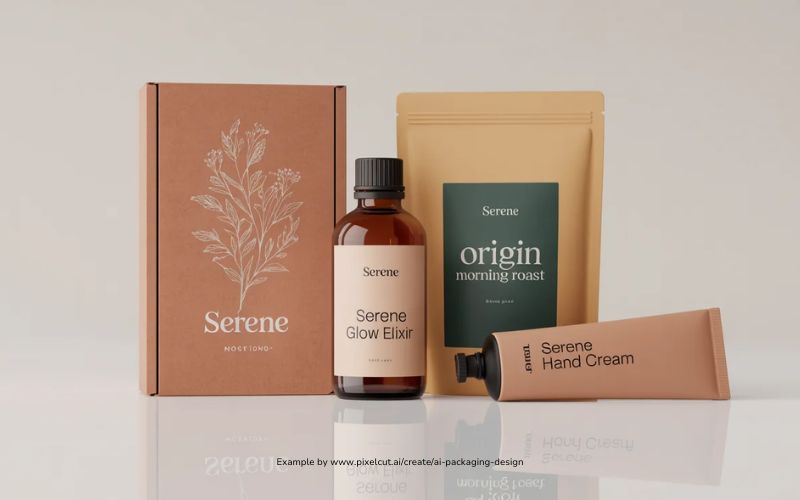
Packaging designs that look like someone typed in “modern natural cosmetics label, minimalist, clean” and hit Enter. Presentation templates with those generic gradient backgrounds and the font that always seems to be trying to be Neue Haas Grotesk but never quite manages it. Ad creatives where the drop shadows are pointing in the wrong direction. And everyone—really everyone—approved them.
That’s not my opinion on AI. That’s my issue with the design standards we’re all collectively lowering right now.

Word Art 2026 – just more expensive and with more confidence
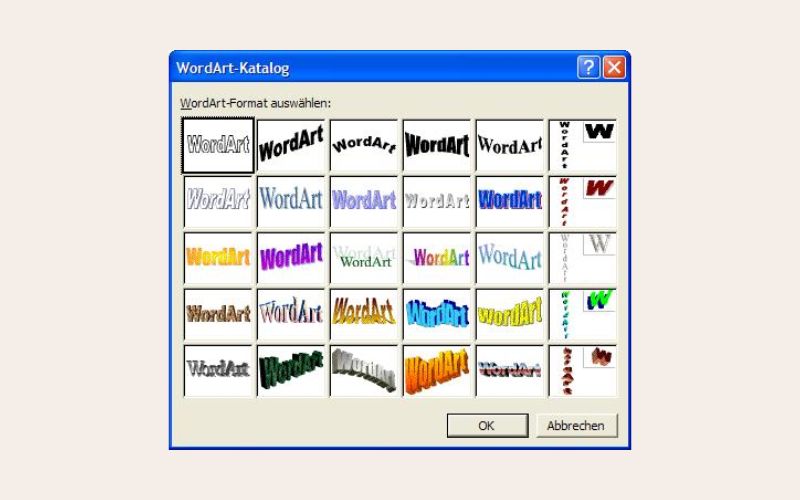
I remember back when people used to design text with WordArt. Do you remember? (And yes, I'm old. :-)
That rainbow-colored text with the chrome effect—it was absolutely everywhere on the 60th birthday flyer. We all laughed about it back then. Or at least those of us who knew what good design meant.
This is the company's 2026 keynote presentation. It has 47 slides. It was sent to 200 potential investors.
The difference: WordArt was the best option most people had back then. This is a deliberate choice.
AI is raising the bar—and you don't even notice
And that really hits home, because I believe that AI is doing something very subtle to us: it’s raising the bar for design quality without us even realizing it.
You’re working on a packaging brief. In the past, you would have told a professional what you wanted and received a first draft two weeks later. You would have either loved it or sent it back with a “closer, but not quite there.” Now you enter a prompt and, in four minutes, you have something that… looks okay. Not great. Not bad. Just okay.
After 6 or 7 rounds of revisions, it’s no longer just okay—it’s “actually pretty good”
And now it's happening. You take the "Actually, not bad." Because it's so crazy that it's even possible.
The tool's capabilities become the benchmark for your results. And THAT is exactly the big problem.
What this does for your brand—and yes, there are statistics to back it up
In September 2025, Clutch surveyed over 1,000 consumers. One-third said that AI negatively affects their perception of brands. Only 16% said it has a positive effect. And the Nuremberg Institute for Market Decisions has shown that simply labeling content as “AI-generated”—even when the content is identical—makes people more skeptical, less engaged, and less likely to buy.
In other words, the result isn't just visually weaker. It actively undermines trust in your brand.
31% of consumers say that AI in advertising makes them less likely to choose a brand—according to CivicScience, July 2025. Every form of public presentation is branding. Your packaging. Your ad. The presentation you send to potential partners. Every touchpoint contributes to the same goal: trust.
If the packaging screams "Midjourney," your target audience—the one you're trying to appeal to with premium products, craftsmanship, and quality—might not buy it. Not because they mean you any harm, but because you've just shown them how seriously you take yourself. And it probably says a lot about the quality in other areas, too, if 70% is good enough for you.
After all, no one can tell that you’re 100% committed to quality with your product—it’s just that you cut corners when it comes to the design.

My two cents, and it's clear:
There are use cases where AI really makes sense—organizing content, conducting research, testing initial ideas, expanding text to the desired length, and testing different versions. That’s true efficiency.
And there are situations where you need a professional—where the result directly impacts your brand identity. Where someone with skill, experience, and a real eye for detail makes the difference between “okay” and “holy sh!t, that’s exactly us.”
The question isn't "AI or no AI." The question is: Would what you're about to approve also be your standard expectation if you had paid for it?
If so, go for it.
If you can't answer "yes" to that question, either do the work yourself or find someone who can.
The brands that will succeed in the coming years aren’t the ones that use AI the most. Rather, they are the ones that use it most wisely—and understand where it creates value and where it destroys it.
Stay bullish 🔥 Chantalle
P.S. If you're not sure whether your current packaging, ad creatives, or pitch deck are building the trust you need—drop me a line. We'll take a look at it together. ✉️ chantalle@boredbrands.studio
