



Polarization as a Strategy
Black Friday 2016. While every brand is throwing discounts around, one company is doing something completely absurd: it’s launching a crowdfunding campaign to dig a hole in the ground. Somewhere in the U.S., for no apparent reason.
Cards Against Humanity, the card game known for its dark humor, poured $100,573 into this hole, complete with a live stream on YouTube and all the trimmings. Excavators, dirt... that's it.
And that was already their fourth anti-Black Friday stunt in a row: In 2013, they raised the price of the game by $5 on Black Friday instead of offering a discount; in 2014, they sold 30,000 boxes of bullshit (no joke); in 2015, they asked their fans for $5 and delivered nothing in return (11,248 people actually did that); and in 2016, the hole appeared.
Any traditional marketer would have called that brand suicide, but spoiler alert: it wasn't. It was a branding strategy that was a perfect fit for the target audience. 🔥

Real Talk
If you want everyone to like you, you’ll end up being interchangeable to everyone. When everyone else was shouting “Buy now!”, CAH simply said, “Nope, we’re doing something different.”
Some people think it's stupid, some think it's brilliant, but the important thing is: everyone's talking about it.
And that’s the whole point of marketing: if you don’t create some friction, you won’t stick in people’s minds. And yes, you can do that creatively, without resorting to clickbait.

Patagonia: a similar move, but in a different league
Five years before the CAH scandal, Patagonia made a similar move, only it wasn't as high-profile and the numbers were painful.
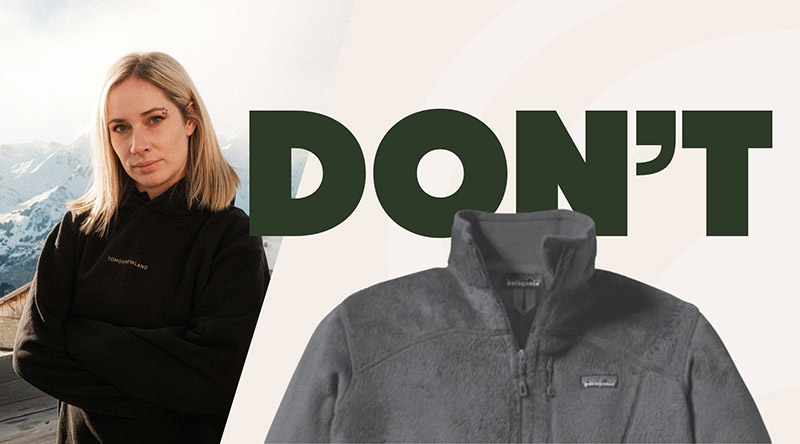
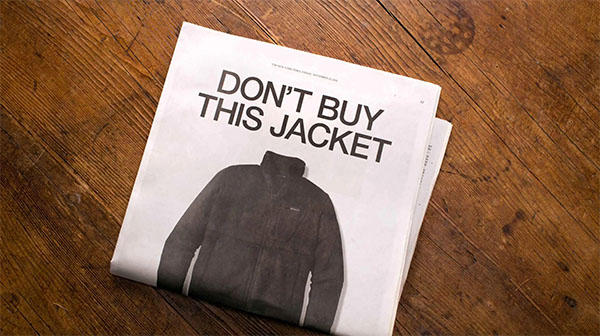
On Black Friday 2011, they ran a full-page ad in The New York Times featuring their best-selling R2 fleece jacket, with a headline that was anything but sales-oriented: "Don't Buy This Jacket."
This wasn't a joke or a tongue-in-cheek remark. The ad copy stated in black and white exactly how many resources this jacket consumes: 135 liters of water, CO2 emissions equivalent to 24 times its weight, and a mountain of waste at the end of its life. The ad cost them $57,000 and generated $40 to $50 million in earned media, resulting in an ROI of about 700x. Wow!
And what about sales afterward? They rose by 30% in the nine months following the campaign, from $400 million to $543 million.
In 2017, they finally broke the billion-mark.
Why this branding works
Both brands actively went against the grain in their own markets—and that’s exactly why they came out on top.
It sounds crazy at first, but it’s pure psychology. A brand that says “Buy less” is taking a risk and, as a result, automatically comes across as confident. And in Patagonia’s case, it also strikes a chord with its target audience—people who DO care about sustainability.
A brand that lets you dig a hole is saying, "We're in this with you," and in doing so builds a community of true fans who are more than just customers.
What they have in common is that they make it crystal clear who they are NOT. Patagonia is not H&M, and CAH is not Hasbro—and they make no secret of it.
Real Talk for Your Own Brand
Now for the part that most newsletters skip over, because you might be thinking , "Yeah, sure, Patagonia and CAH have big budgets—but what's in it for me with my 2,000 followers?"
Quite a lot, actually, because polarizing doesn't automatically mean running big-budget anti-advertisements. It can also be done on a smaller scale, like this:
1. Decide who you DON'T want.
Patagonia simply doesn’t target fast-fashion shoppers, and CAH deliberately doesn’t cater to family game nights with Grandma. Both have deliberately excluded a segment of the market—and they’re doing damn well for it. So ask yourself honestly: Who are you specifically excluding from your target audience? If your answer is “no one,” you’ve got a branding problem right there.
2. Say out loud what you won't do.
Our studio’s website clearly states that we don’t take on “pure logo projects” and that we only work with clients who are open to our advice. I also make this point explicitly clear during the initial call. This helps filter out inquiries that wouldn’t have been a good fit anyway, making room for the right projects and clients.
3. Do the opposite of what everyone else in your industry is doing.
If everyone in your industry is doing Black Friday, then take Black Week off. If everyone is advertising with "fast and cheap," then position yourself with "slow and thoughtful." If everyone is using stock photos, then go with original images that have character. You don't have to do all of these things, but I'm sure there's at least one that makes sense for you.
Branding thrives on contrast and dies through conformity.
4. Go after the ones who don't like you.
That’s the part that hurts the most, because it’s so counterintuitive. When you take a polarizing stance, you get hate comments and unsubscribes, and you hear things like “that’s too much for me”—and that’s not a glitch in the system; that’s the win.
If you want to be loved, you have to accept that some people just can't love you.

MY 2 CENTS
Most brands don't want to alienate anyone, and I actually get that, because nobody likes losing customers. But brands that don't alienate anyone don't really win anyone over in the end either; they remain mere acquaintances to their customers and never become true favorites.
When Patagonia said "Don't buy this jacket" back then, they lost a few customers. The ones who heard that and thought, "OK, then I really won't buy it," weren't their actual target audience anyway. But those who stayed have been true brand fans for over 10 years. CAH, on the other hand, alienates every family with a grandma every Black Friday, and their fans love them all the more for it.
So ask yourself: What does YOUR branding stand for so clearly that someone could say, “No thanks, not for me”? Spoiler: If you can’t answer that question in a single sentence right now, then that’s exactly what your next branding move should be. 🔥
Stay bullish 🔥 Chantalle
P.S. – If your brand is trying to please everyone and, as a result, isn’t really connecting with anyone: just reply to this newsletter. We’ll take an honest look at your brand and let you know where you can make improvements. ✉️ chantalle@boredbrands.studio
