



Many brands are currently missing out on the biggest marketing opportunity of the year. ☀️🥵
Spain and Portugal are nearing the 40-degree mark this week; in England, the May temperature record—which had stood since 1922 and 1944—was broken on two consecutive days; and in Germany, we’re seeing steady temperatures of 30+ degrees, even though summer hasn’t even officially started yet.
So while half the continent is Googling air conditioners and swimming pools are filling up, something exciting is happening in the marketing world: some brands are having their strongest month yet, while others don’t even realize that the marketing moment of the year is passing them by.
And that’s exactly what today is all about, because it’s not just about luck—it’s about how well your brand can respond to spontaneous moments without losing its own identity. 🔥

What Reactive Branding Actually Is
Reactive branding is basically nothing more than responding to real-world situations (weather, news, trends, social events) in a way that benefits your brand rather than diluting it. That sounds like something only big brands can pull off, but in fact, it’s one of the few areas where small brands actually have an advantage, because you don’t have to go through five rounds of approval before you can put something out there.
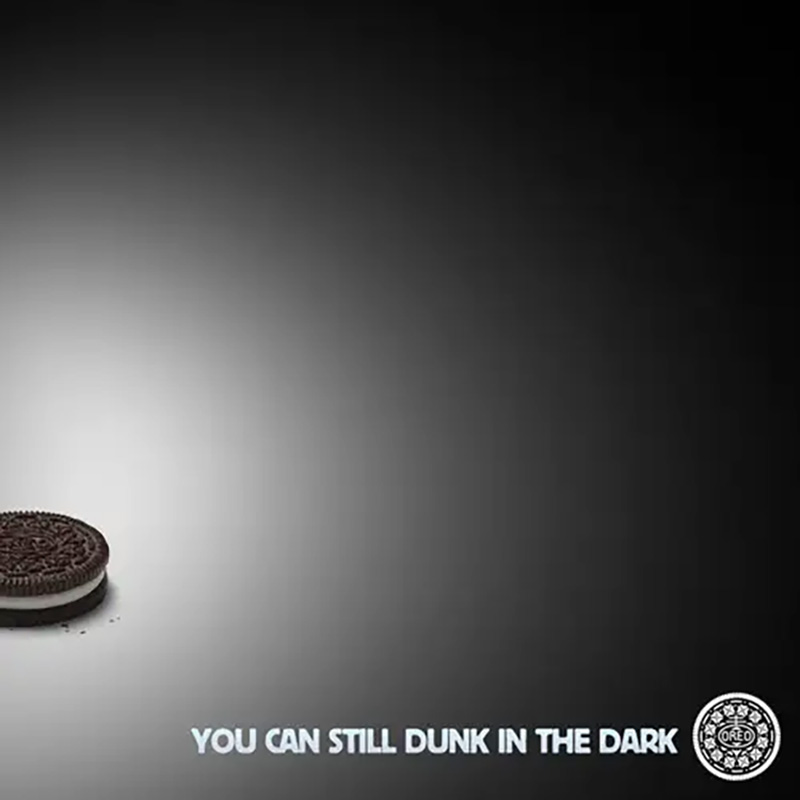
The most famous moment in reactive marketing came during the 2013 Super Bowl. During the game, there was a 34-minute power outage at the stadium; half the country was sitting in the dark in front of their TVs, and within minutes, Oreo sent out the tweet : "Power out? No problem. You can still dunk in the dark.” The tweet garnered around 15,000 retweets at the time and remains the blueprint for reactive marketing to this day.
The crazy thing is: while it seemed spontaneous, it wasn't. Oreo had a 15-person team stationed in a sort of live newsroom, ready to react to any event throughout the entire game . Spontaneity takes preparation.
Why heat is a marketing trigger that most people overlook
Deliveroo discovered something pretty wild in the UK in early 2026: as soon as the temperature there hits 16 degrees, Aperol orders through the app skyrocket by nearly 400%. Not at 25 degrees, not at 30, but at 16. That means consumer behavior doesn’t shift only during a heat wave, but much earlier than most brands even start planning their summer campaigns.
And this is exactly where so many brands miss their chance. Because they wait for summer as if it were just a date on the calendar, instead of realizing that consumer behavior responds to real-world triggers. As soon as the weather warms up, people search for different things online, buy different foods, spend time outdoors differently, and scroll through social media differently.
Anyone who fails to reflect that simply won't be relevant when it really counts.
Spontaneous, but still on-brand
Now here’s the important caveat: “spontaneous” doesn’t mean “arbitrary.” Reactive branding only becomes a strength if the reaction aligns with your brand.
As soon as you start suddenly posting summer vibes just because everyone else is doing it—even though your brand is actually positioned as edgy, dark, and rebellious—you lose credibility, and that’s the worst branding move ever.
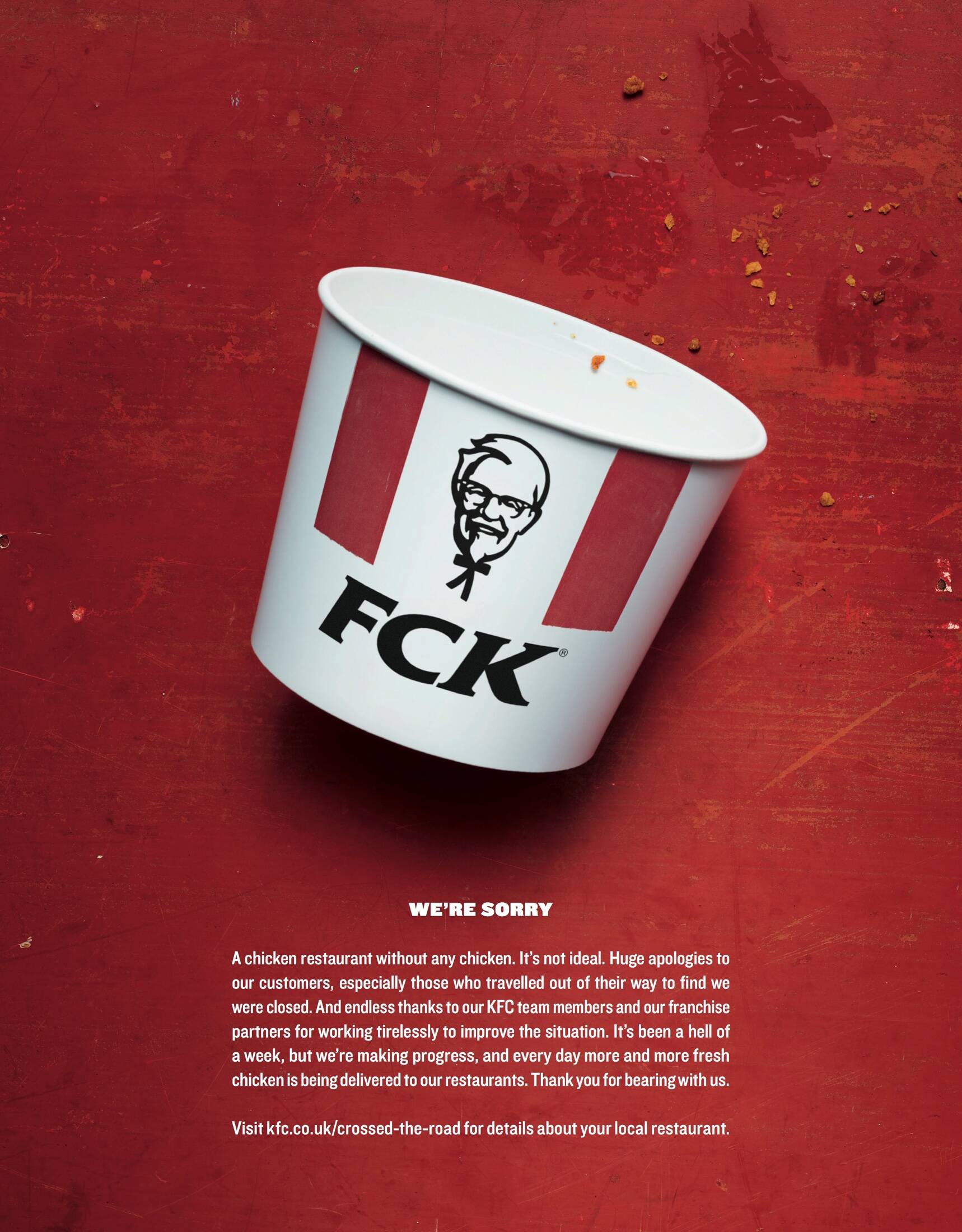
KFC demonstrated just how clever this can be in the UK in 2018. In February of that year, due to a change in DHL logistics, over 800 of their 900 locations ran out of chicken—which is quite a problem for a chicken restaurant. Instead of a traditional PR apology, they ran a full-page ad in The Sun and Metro featuring an empty chicken bucket with the three letters "FCK" instead of "KFC." Below it was a matter-of-fact caption: "A chicken restaurant without chicken. Not ideal."
The campaign went on to win the Gold Lion at the Cannes Lions and is considered one of the most successful crisis responses of all time. What’s so important here is that KFC is already a dry, self-deprecating brand, so this fit perfectly with its tone.
If Nespresso or Lufthansa had made the same move, it wouldn't have worked.
Real Talk for Your Own Brand
Here’s how you can use reactive branding to your advantage without having to improvise on the spot and end up looking foolish. And yes, you don’t have to implement it everywhere, but you should at least try out one or two of these points this summer.
1. Build up a stockpile of responses.
The brands you consistently see at the top of reactive marketing aren’t really improvising; they’ve simply prepared templates, tone guides, and sample visuals in advance that they can quickly adapt in response to specific triggers (heat, rain, news events, viral moments). During the Super Bowl, Oreo had a team with pre-built workflows that reduced everything to just two mouse clicks. Here at the studio, we call this a “Brand Reaction Kit,” and honestly, setting one up takes an afternoon and saves you weeks later on.
2. Define your weather triggers.
What happens in your industry when the weather heats up? Which products suddenly start selling better, which topics become more relevant on social media, and what issues does your target audience face? Once the temperature hits 20 degrees, a coffee shop should stop promoting its winter latte variations and start pushing cold brew instead. A skincare brand should talk about SPF and hydration during heat waves, not anti-aging serums. That sounds obvious, but 80% of brands simply don’t do it.
3. Respond to real problems, not trendy sounds.
The difference between good and bad reactive moves is simple: Do they solve a real problem, or are they just jumping on the bandwagon? When it’s 95 degrees, your target audience’s real problems might include: sweaty skin, not feeling like cooking, trouble sleeping, the dog panting, and makeup melting. If you have a brand that addresses one of these issues, this is your moment. If not, just don’t post anything specific to the heat wave and stick to your regular content. It’s better not to react at all than to force a response.
4. Speed beats perfection.
Reactive marketing only works if it happens in the moment. A heat wave that you react to three weeks later is simply over by then. When in doubt, a story that’s 80% done and goes live today is a thousand times more valuable than a perfect campaign that launches next week when it’s raining again. Small brands actually always have this instinct, but they often forget it because they try to appear “professional.” Spoiler: Speed and relevance come across as more professional than glossy perfection after the fact.

MY 2 CENTS
What’s happening in Europe this week is a gift to any brand capable of responding quickly. With temperatures hitting 40 degrees in Spain, a record-breaking May heatwave in England, and a heat dome over Germany, there’s a target audience that’s currently responding to any real-time content that makes their lives better right now. This isn’t a summer marketing cliché; it’s a concrete sales and branding opportunity that presents itself so clearly just once a year.
The brands that deliver now will be associated with the summer of 2026 in their customers' minds. The others will have fallen off the radar by July and will be wondering in September why things have gone so quiet.
So ask yourself: What is your brand doing this week that it wouldn't do if the temperature were 12 degrees? If your answer is "nothing, really," then that's exactly what you should be doing for the next few days.
Stay bullish 🔥 Chantalle
P.S. – If you’ve noticed that your brand is too slow to respond to real-time triggers and you’re not sure how to set up a systematic process for this, just reply to this newsletter. We’d be happy to work with you to build a simple reaction kit so you don’t have to start from scratch every time. ✉️ chantalle@boredbrands.studio
