


Disney-Level Branding: The Tomorrowland Method
Hey Brand fan,
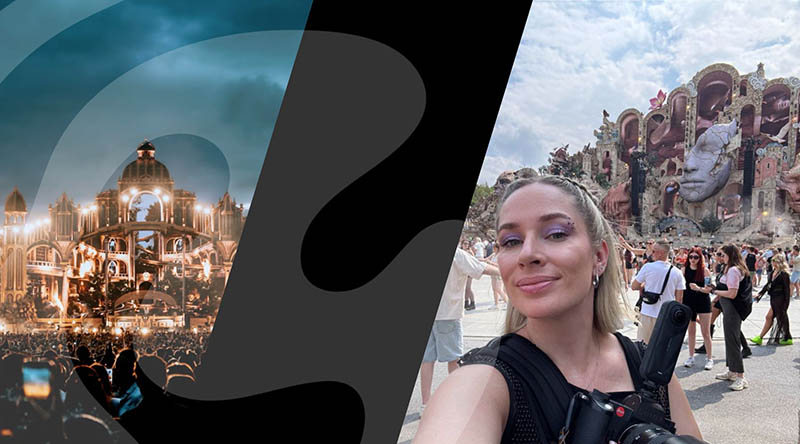
I just got back from Tomorrowland, Weekend 1. It was my eighth time there—three of those times completely on my own. And I spontaneously went to Weekend 2 right after that—the ninth time was the most special, but that’s another story I’ll share with you very soon.
For me, it’s the most amazing festival in the world, with incredibly nice people from over 200 countries and a level of attention to detail that I’ve only ever seen at Disney World. It’s the only place where, as someone who works in branding, I want to completely switch off—and yet every two meters I find myself thinking, “Who came up with THAT?”
I've written here before about the magic of the venue itself. Today, I want to talk about the bigger picture behind it all. That's because Tomorrowland treats a festival like a fantasy franchise. And that's exactly what makes it one of the most exciting branding cases I know of.

The Heart of It All
Every year, the festival gets a new theme. And for them, a theme isn’t just a slogan you slap onto the key visual. It’s like a fantasy screenplay that rewrites EVERYTHING.
Here are a few examples of how you can put this into practice each year:
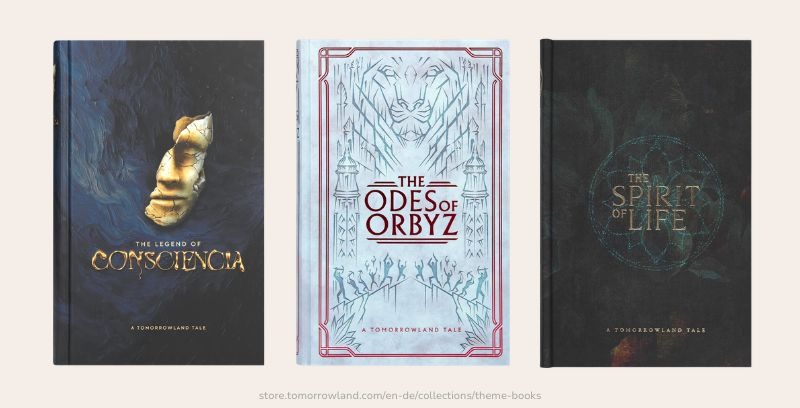
The Novel. Since 2023, a separate fantasy novel of over 300 pages has been published for each theme as an origin story, months before the festival. "The Rise of Adscendo" (2023), "The Spirit of Life" (2024), "The Odes of Orbyz" (2025, accompanied by its first original comic), and this year’s "The Legend of Consciencia," which has already gone into its second printing. So first you read about the world, and then in July you’re right in the middle of it, recognizing the characters and symbols from the book. The brand has its own fiction department. Let that sink in for a moment: a festival employs novelists.
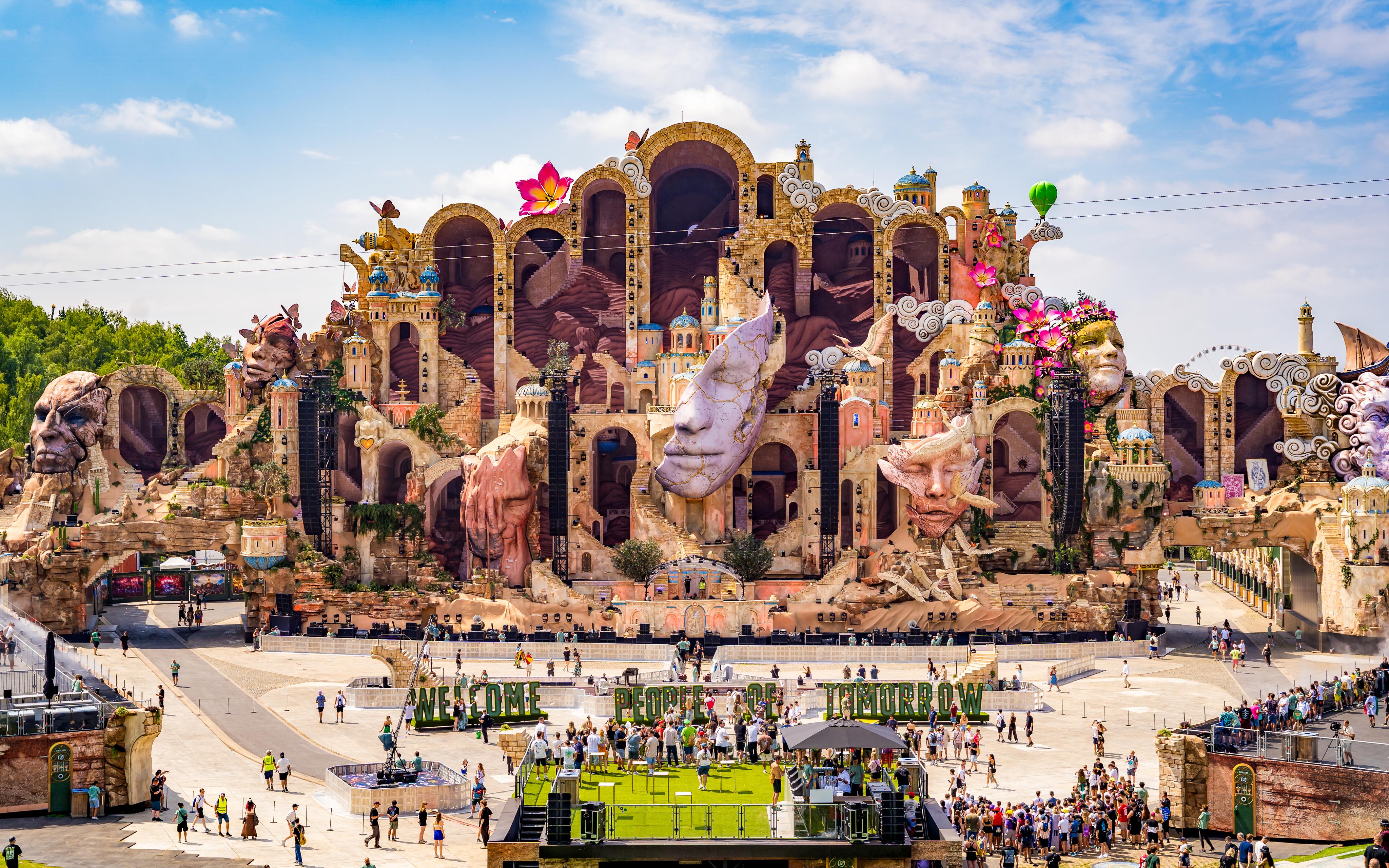
The Stage. The Main Stage is rebuilt from scratch every year; since 2009, it has always been designed as a reflection of the festival’s theme, developed entirely in-house from the first sketch to final assembly. The ice world “Orbyz” (2025): 160 meters wide, 45 meters high, 2,120 decorative elements, 65 water fountains, two waterfalls.
And the stages don’t even disappear afterward: Since the comeback in Brazil, the Belgium Main Stage has been going on tour the following year. The 2023 Adscendo Stage was transported to São Paulo in 2024, followed by the LIFE Stage in 2025. The themed world tours the globe like a theater production.
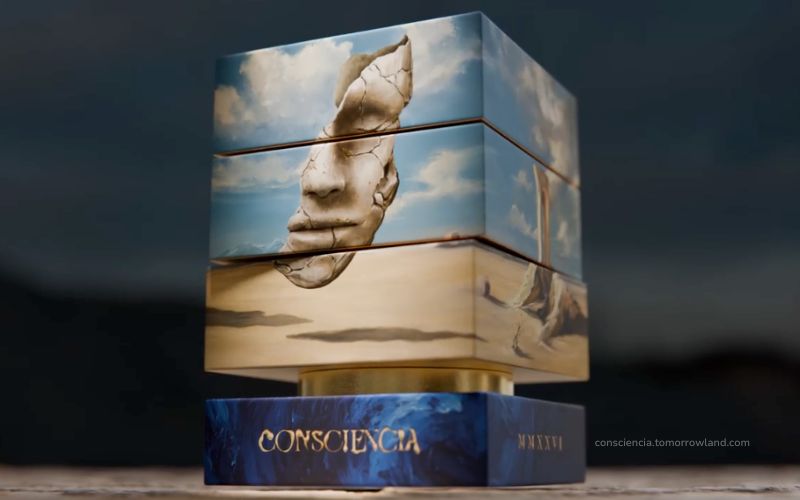
The Treasure Case. Your ticket doesn’t come as a PDF. It arrives by mail as a “Treasure Case”: a themed box containing the wristband, completely redesigned every year. The 2017 box had a built-in music box. Some years, it contains a necklace that has already hinted at part of the stage design. The unboxing has long since become a ritual in its own right, racking up millions of views, and the empty boxes are traded secondhand—without the bracelet. Let’s break that down: People pay money for the packaging of a redeemed ticket.
And the rest follows suit: a trailer, a merchandise collection, and design details for all 16 stages. The 2026 theme, “Consciencia,” is a world of emotions featuring six factions, each with its own visual language. And for the first time, the story spans all editions: from Boom to Brazil to the Thailand premiere in December 2026. A narrative universe spanning three continents.
My two cents on why this is so brilliant:
✅ This slogan solves the biggest problem any brand with a consistent product faces: Why would anyone buy it again? Answer: Because this edition will never happen again. Same festival, a new reason every year. A collectible concept instead of a discount-based one. Even though no one at Tomorrowland is likely to book a ticket just for that reason...
✅ The experience doesn't start at the entrance. It starts months before, with a book on your nightstand and a treasure chest in your living room. When most brands hear the word "touchpoint," they think of their website. Tomorrowland thinks of your home.
✅ Consistency down to the last detail. If the slogan exists only on a poster, it’s nothing more than decoration. Here, it’s present in the novel, on the wrist, on stage, and in the merchandise. It’s precisely this consistency that sets a campaign apart from a brand universe.
Side note, since it answers the question of how they can afford something like this: Tomorrowland is still wholly owned by its two founders, the brothers Manu and Michiel Beers. It’s family-owned, with no external investors (they deliberately chose not to participate in the sell-off of the EDM world to U.S. corporations in 2013), but with a 66-year lease on their festival grounds and 80 full-time employees who spend two weekends a year setting everything up. No investor asks why a stage needs 65 fountains.
And in 2025, the whole world saw just how resilient this machine is: Two days before the festival began, the Orbyz Main Stage burned down—75% destroyed, yet no one was injured. Less than 48 hours later, the festival opened right on schedule, with a replacement stage. To this day, it remains one of the most spine-tingling moments I’ve ever experienced—when the stage was unveiled and everyone applauded the last of the construction workers.
Real Talk
You don’t need 400,000 visitors to think this way. The question behind it works on any scale: What if what you’re offering weren’t a product, but a chapter? What would change for you each year that your customers are waiting for? It could be an annual limited edition, a theme for your content each year, or packaging that people want to keep. You don’t have to go so far as to have a novel written just yet.
Stay bullish 🔥
Chantalle
P.S. You'll be able to read about what I experienced on the second weekend of this year very soon here in the newsletter. Or on my podcast. Have you checked it out yet? 😉 TRULY BULLISH on Spotify | TRULY BULLISH YouTube
