



If you're not allowed to show your product, all you have left is your brand
Hey Brand fan,
Most ads work on a simple principle: put the product in, add the price, and you're done. And as long as that works, no one notices how little branding is actually involved.
It only gets really exciting when that's exactly what you can't do.

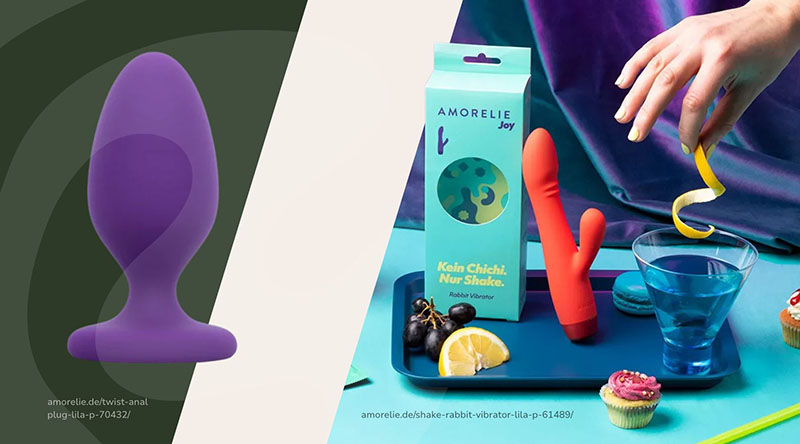
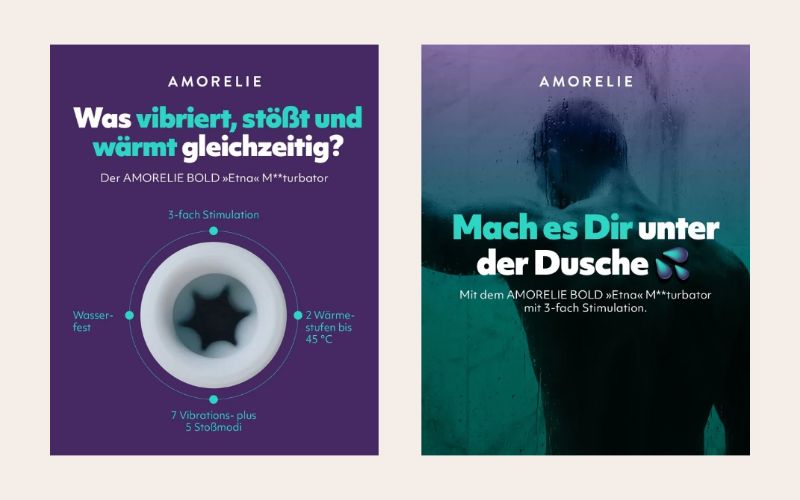
We create social media ads for AMORELIE, the Berlin-based sexual wellness brand. Creative direction, design, copy. We’re currently in the middle of an iterative process because the project has turned into an ongoing collaboration. 🔥
The problem with this category: Meta rejects ads as soon as they seem even slightly sexual. Just show the product and describe exactly what it does? That doesn't work. Explain at length what it can do? It gets tedious, comes across as forced, and will likely get rejected anyway.
So that leaves only what many brands tend to skip over. The ad has to look like AMORELIE right away, spark curiosity, and work with subtlety rather than always stating the obvious.
In practice, this means we work very closely with the team and analyze performance data. We test visuals, image croppings, and copy, and keep what stays live and converts.
The rest gets thrown out.
Real Talk: AMORELIE isn't the only one facing this problem.
The Center for Intimacy Justice surveyed 2,025 companies in the sexual and reproductive health sector. 84% of them had ads rejected by Meta. At the same time, ads for male sexual enhancement products with pretty explicit slogans are running there. It’s pretty wild.
While these brands are fighting for every single approval, everyone else is sitting back and relaxing. According to the Nielsen Annual Marketing Report 2024, 70% of marketers wanted to increase their performance budget—at the expense of brand building.
In other words: Some aren't allowed to show their product and are forced to build a brand. Others are allowed to show everything but still don't build one.
Three brands that have turned the ban into their strength:
1. Femtasy: Persistence as a System
Femtasy, based in Berlin, is an audio platform for erotic content from a female perspective. According to founder Nina Julie Lepique, Meta initially rejected up to 45% of its ads (OMR, May 2024).
Giving up wasn't an option, so the team turned it into a system: Scale, Iterate, Kill. As a result, the rejection rate dropped by 90%. The ads ran 2.5 times as long, and the budget per ad grew up to six times.
Really clever: According to Lepique, video ads featuring real female coworkers performed about 15% better than other formats. And when Femtasy disabled comments on its Instagram ads, the cost per new customer rose by up to 40%. So even critical comments are part of the brand.

2. Womanizer: The Rejection Becomes a Story
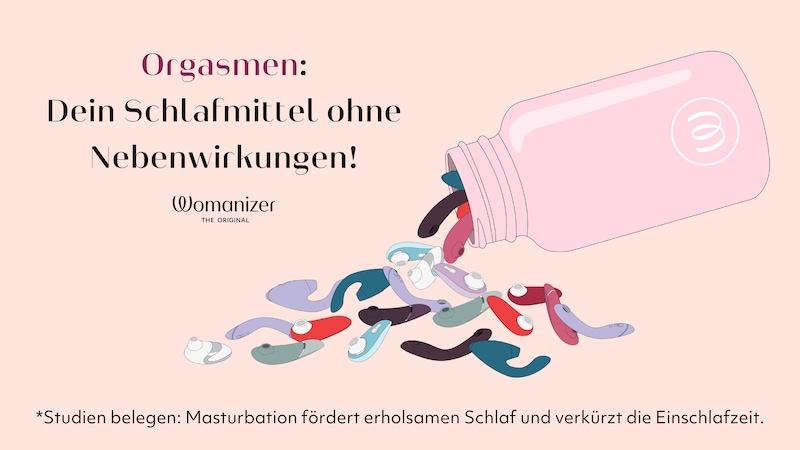
Womanizer is a German brand and, through the Berlin-based WOW Tech Group, is part of the Lovehoney Group (yes, the same family as Case 3). In May 2024, the brand wanted to put up posters at five Berlin train stations for “Masturbation May,” using a study on orgasms and better sleep as the hook. Deutsche Bahn rejected the proposal. According to Womanizer, the reason given was that the message went too far.
And then? The cancellation itself became news; *Horizont* and others reported on it. The brand is no stranger to this: In 2023, Instagram suspended the account; Womanizer, along with its sister brands, launched the #UnmutePleasure campaign, and shortly afterward, the account was back.
3. Lovehoney: Just try something different
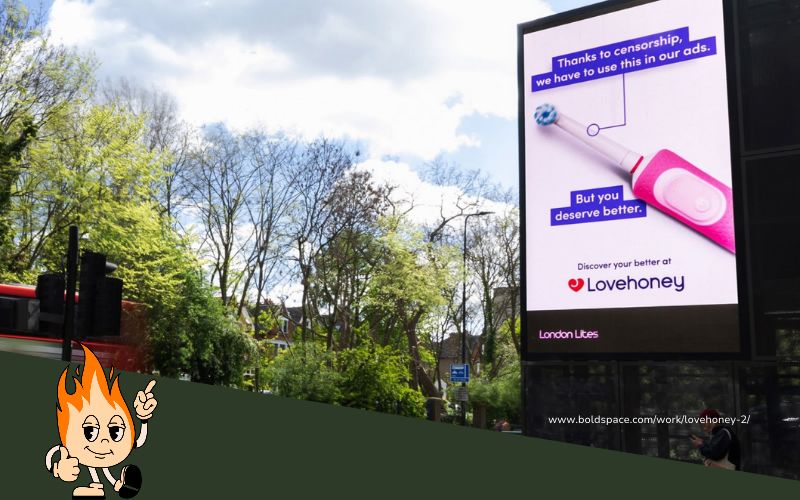
In many markets, Lovehoney is simply not allowed to feature sex toys on its posters. As a result, in June 2024, billboards in Australia featured household items: pillows, showerheads, vegetables, and electric toothbrushes. Accompanying these was a statistic from Lovehoney’s own survey: 34% of Australians use exactly these kinds of items in bed. The message on the billboards: “You deserve better.”
Not a single product is shown in the image, and yet everyone knows immediately what it’s about. By 2025, Lovehoney had built an entire brand platform around this in the UK called “Feel the Lovehoney,” which uses innuendo and humor across TV, digital, and social media.
My 2 cents:
If your ad only works because the product is prominently displayed in the center, you don't have a brand ad. And you don't have a brand either.
Product images are totally legit—you need them to make sales. But brands like AMORELIE show where the real work lies: visual language, color, tone, and humor that are so distinctly “you” that someone recognizes you after just two seconds of scrolling. All without a packshot.
Try the thumb test. Place your thumb over the product in your latest ad. Can anyone else tell who it's from?
And if you're a service provider: You deal with this problem every day anyway. Consulting, software, coaching, tax accounting—none of it looks good on camera. Welcome to the club. 😅
The brands with the strictest rules are currently building some of the strongest brands. Maybe you should just pretend you have some, too.
Stay bullish 🔥
Chantalle
P.S. Do you have a product or service that’s hard to promote? Send me your current ad in a reply, and I’ll give you my honest opinion on whether it passes the “thumbs-up” test. ✉️ chantalle@boredbrands.studio
